
Meditation is often marketed as effortless calm: sit down, breathe, become enlightened. The reality is quieter—and more useful. Meditation is simple, but it isn’t always easy, and how you approach it matters more than how long you sit.
Done well, meditation can improve focus, emotional regulation, and self-awareness. Done poorly, it can become frustrating, ineffective, or—rarely—overwhelming. The difference usually comes down to a small set of dos that support the nervous system and a handful of don’ts that prevent common mistakes.
This guide breaks meditation down clearly, safely, and realistically—especially for beginners—using evidence-based guidance from mindfulness teachers and current research.

How to start meditating for beginners (What Actually Helps)
Start small and stay consistent
The biggest mistake beginners make is starting too big. Five minutes a day, practiced consistently, is more effective than an hour once a week. Short daily sessions help your nervous system adapt gradually and make the habit sustainable.
Consistency trains familiarity. Familiarity builds ease. Ease keeps you coming back.
Create a quiet, supportive environment
Meditation works best when your surroundings don’t fight for attention. A quiet, uncluttered space signals to the brain that it’s time to settle. You don’t need incense or chanting—just fewer distractions.
A cushion, chair, or soft lighting isn’t decoration; it’s psychological framing.
Choose a comfortable, stable posture
What is the best meditation posture?
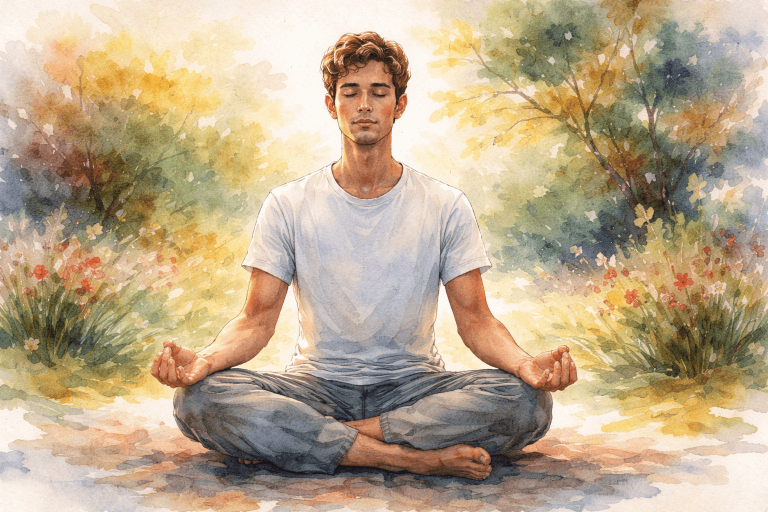
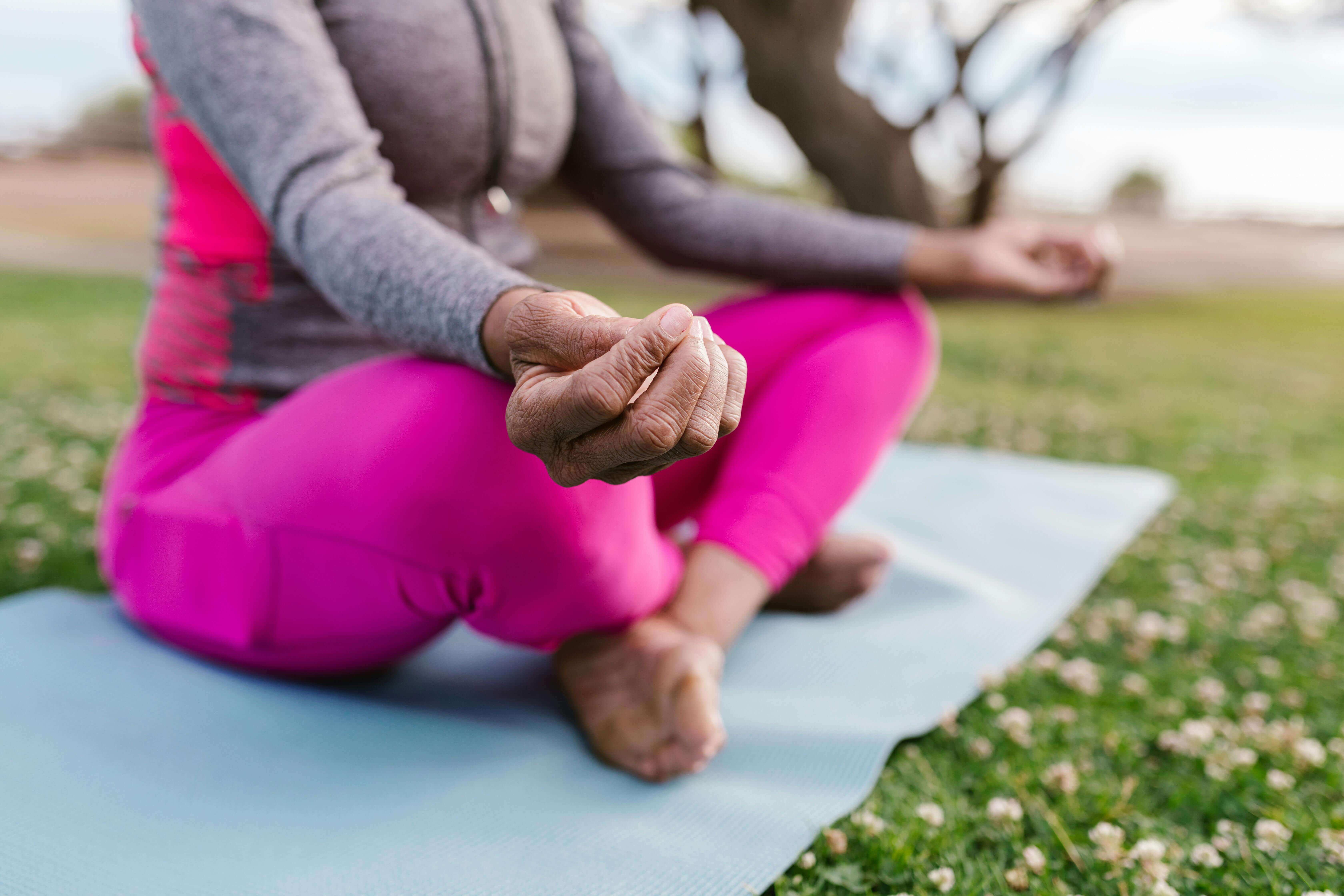
Meditation isn’t about sitting in pain. Research-informed guides emphasize posture that is alert but relaxed. Sitting upright in a chair, on a cushion, lying down, or even walking can all work—as long as the body feels supported.
Discomfort drains attention. Stability supports it.
Focus on awareness, not “clearing your mind”
This is where most beginners get it wrong.
Meditation is not about stopping thoughts. Thoughts will appear—that’s normal. The practice is noticing when attention drifts and gently returning it to an anchor, often the breath.
Awareness grows through repetition, not force.
Follow one simple method at first
Stick to one technique—breath awareness, body scanning, or simple noting. Mixing methods too early creates confusion and self-doubt. One clear approach builds confidence and teaches you what meditation actually feels like.
Depth beats variety at the beginning.
Integrate mindfulness into daily life
Meditation doesn’t end when the timer stops. Pausing before reacting, noticing bodily sensations while walking, or observing thoughts during stress is where real change happens.
Formal practice trains the skill. Daily life applies it.
Adapt meditation to your body and health
Legitimate mindfulness programs encourage adaptation. Chairs, shorter sessions, lying down, or movement-based meditation are all valid. Listening to the body prevents strain and supports long-term practice.
There is no “correct” posture—only a workable one.

The Most Common Meditation Don’ts (and Why They Backfire)
Don’t expect instant results
Release YOUR Meditation Expectations
Meditation works gradually. Early benefits are subtle: slightly less reactivity, more awareness, a growing sense of mental clarity. Expecting dramatic change in days often leads to frustration and quitting.
Meditation compounds quietly, like interest.
Don’t fight thoughts or emotions
Trying to suppress thoughts makes them louder. Standard mindfulness instruction encourages noticing thoughts and emotions without judgment and returning attention gently to the anchor.
What you resist tends to persist. What you observe tends to soften.
Don’t jump between techniques constantly
Reading about meditation is not the same as practicing it. Switching styles too often prevents understanding how any one method works. Stay with a single technique long enough to recognize patterns in attention and reactivity.
Insight comes from continuity.
Don’t ignore physical signals
Pain, numbness, or dissociation are signals—not signs of progress. Proper posture and body awareness anchor the practice and reduce unnecessary discomfort.
Meditation is embodied. Ignoring the body undermines the mind.
Don’t assume longer sessions are better
How long should you meditate?
Long sessions too early can cause fatigue, frustration, or emotional overwhelm. Short, regular sessions are safer and more effective for beginners.
Duration follows stability—not the other way around.
Don’t use meditation to avoid life
Meditation isn’t an escape hatch. Using it to disengage from responsibilities or relationships defeats its purpose. A healthy practice increases clarity and engagement—it doesn’t replace them.
Meditation should meet life, not bypass it.

Meditation Safety: What Beginners Should Know
Difficult experiences can happen
Research shows a minority of meditators experience adverse effects such as anxiety, low mood, or perceptual changes. These are often temporary, but they highlight the need for informed expectations—especially as meditation becomes mainstream.
Meditation is powerful precisely because it changes how attention works.
Seek guidance when appropriate
Emerging safety frameworks emphasize trained teachers, clear instruction, and appropriate screening—especially in clinical or therapeutic contexts. Individuals with severe mental health histories are often advised to learn in structured settings with professional oversight.
Support isn’t weakness; it’s context.
Don’t ignore persistent distress
If meditation consistently worsens symptoms or interferes with daily functioning, reduce intensity, pause practice, and consult a qualified professional. Meditation is a tool—not a test of endurance.
Stopping is sometimes the skillful move.
Conclusion: How to Meditate Without Overthinking It
Meditation works best when approached with restraint rather than ambition. Start small. Stay consistent. Let thoughts come and go. Adjust for your body. And remember: the goal isn’t to escape your mind—it’s to understand it.
Practiced wisely, meditation becomes less about changing who you are and more about meeting experience with clarity. That’s where its real power lives.

Evidence-Based Meditation Resources
Beginner Meditation Guides & Best Practices
- Live and Dare – Common Meditation Mistakes Beginners Make
https://liveanddare.com/meditation-mistakes/
Excellent beginner-focused breakdown of unrealistic expectations, consistency, and technique hopping. - Mindful.org – Mindfulness Meditation: How to Do It
https://www.mindful.org/mindfulness-how-to-do-it/
Foundational guide to mindfulness meditation, posture, awareness, and daily-life integration. - Falcon Healing Arts – Beginner Meditation Tips and Mistakes to Avoid
https://falconhealingarts.com/beginner-meditation-tips-and-mistakes-to-avoid/
Clear, accessible advice for first-time meditators with practical do’s and don’ts. - The Daily Meditation – Common Meditation Mistakes Beginners Make
https://www.thedailymeditation.com/common-meditation-mistakes-and-what-you-can-learn-from-them
Explores mindset issues, overeffort, and expectations from a practitioner’s perspective.
Meditation Posture & Physical Alignment
- Headspace – The Best Meditation Positions for Beginners
https://www.headspace.com/meditation/positions
Explains sitting, lying down, walking, and chair-based meditation options. - Mindful Institute – A Step-by-Step Guide to Finding Your Meditation Posture
https://www.mindfulinstitute.org/blog/article-a-step-by-step-guide-to-finding-your-meditation-posture
Detailed posture guidance focused on comfort, alignment, and sustainability.
Practitioner Experience & Community Insight
- Reddit r/Meditation – Common Beginner Meditation Mistakes (Community Discussion)
https://www.reddit.com/r/Meditation/comments/114vc8u/what_are_the_main_mistakes_a_meditation_beginner/
Real-world experiences highlighting common struggles and misconceptions.
Meditation Safety & Research-Based Evidence
- Farias et al. – Adverse Events in Meditation Practices
Acta Psychiatrica Scandinavica
https://onlinelibrary.wiley.com/doi/10.1111/acps.13225
Peer-reviewed research examining negative or challenging meditation experiences. - Baer et al. – Defining and Measuring Meditation-Related Adverse Effects
https://pmc.ncbi.nlm.nih.gov/articles/PMC8845498/
Systematic framework for identifying and discussing meditation-related risks. - Lesley University – Meditation Safety Toolbox and Risk-of-Harm Framework
https://digitalcommons.lesley.edu/cgi/viewcontent.cgi?article=1036&context=mindfulness_theses
Academic proposal outlining safety standards, screening, and responsible instruction.
What Are The Five Stages Of Meditation?